
Nobody sits down one afternoon and thinks, right, today to start researching care homes. It usually comes after something, a phone call from a hospital, a moment at home that frightened everyone, or a slow realisation that’s been building for months that the current situation isn’t sustainable anymore.
And then you’re suddenly in the middle of a process you were not prepared for, trying to make sense of care types, locations, and specialist support like Neurological care services, when what you really need is for someone to explain things clearly.
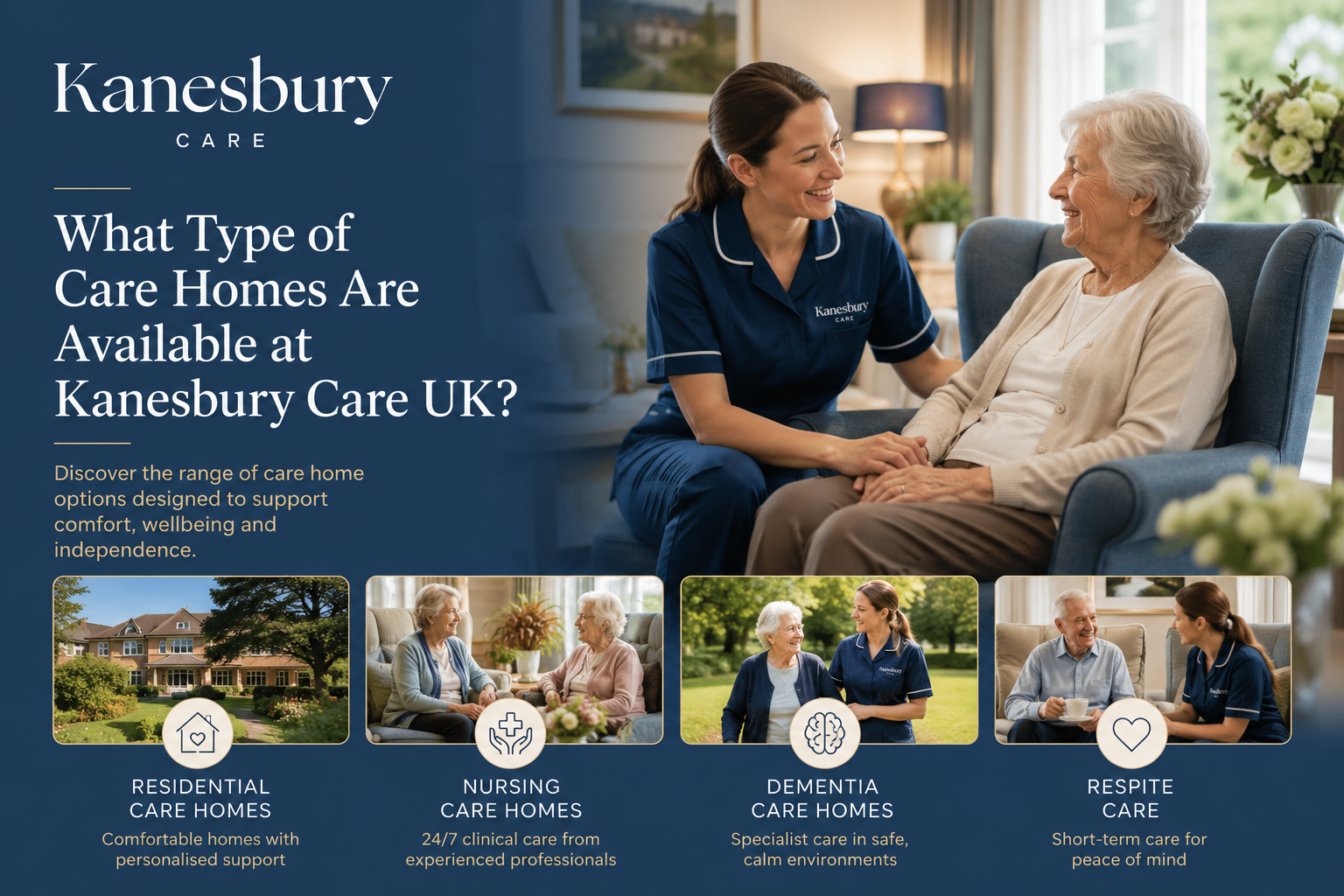
So that’s what this is. Kanesbury Care has six homes across Bournemouth and Poole, each offering something slightly different. Here’s what each type of care actually means, not the brochure version, the real version.
Residential Care: When Day-to-Day Life Needs a Hand
Residential care is for people who find daily life difficult to manage alone but do not yet need full-time medical support. It helps with personal care, meals, mobility, and daily routines while allowing residents to keep as much independence as possible.
At Kanesbury Care, the focus is on comfort and familiarity. Staff take time to know each resident properly, and routines are shaped around the person, not just the home’s schedule. That makes settling in feel far less overwhelming.
Dementia Care: Knowing the Person Before the Diagnosis
Families often say after a loved one moves into dementia care, “We wish we had done this sooner,” because they finally see them having good days again.
Dementia is different for everyone. The confusion, anxiety, and distress do not follow one pattern, so care should not either. At Kanesbury Care, support starts by understanding the person: their routines, comforts, and what helps them feel calm. That shapes everything from daily activities to how staff communicate, creating care that feels familiar, personal, and reassuring.
The right care home brings comfort, safety, and peace of mind for your loved one.
Nursing Care: When Medical Needs Can’t Wait Until Morning
Some conditions reach a point where proper oversight means having a qualified nurse in the building, not on call, not reachable by phone, physically present at any hour.
Wound care that needs daily attention. Medications with narrow margins for error. Conditions that can shift quickly and without warning in the middle of the night. A residential setting can’t safely manage those things, and expecting family members to fill the gap isn’t realistic either.
Kanesbury’s nursing homes have registered nurses on-site twenty-four hours a day. For families who’ve been losing sleep over what happens if something goes wrong overnight, that’s not a small reassurance. It’s a genuinely significant one.
Respite and Day Care: So the People Doing the Caring Can Keep Going
Caring for someone at home full-time is exhausting in a way that’s difficult to describe to anyone who hasn’t done it. And most people doing it feel too guilty to admit they need a break, which means they usually don’t ask for one until they’re genuinely running on empty.
Respite care isn’t abandonment. It’s what makes it possible to keep going. A short stay at Kanesbury, a week, two weeks, whatever’s needed, gives the person being cared for proper support in a safe and sociable environment, while the person who’s been carrying everything gets some actual rest.
Day care works for people who benefit from structure, company, and activity during the day, then return home in the evenings. Neither option is a step toward permanent care unless the family decides, in their own time, that it is.
The Homes Themselves Are Worth Thinking About
Kanesbury’s six homes- Eagles Mount, Aranlaw House, Regency Manor, Branksome Park, Kingsman House, and Seabourne House are spread across Bournemouth and Poole, and they genuinely each have their own feel.
Eagles Mount overlooks Poole Harbour. Seabourne House is a short walk from the coast at Southbourne. Kingsman House sits next to the green open space of Meyrick Park. Branksome Park is calm and suburban.
Where someone lives matters. It affects their mood, their sense of familiarity, and how quickly they settle. It’s worth visiting more than one home before deciding, not just to check the facilities, but to get a feel for whether the environment suits the specific person you’re trying to help.
Conclusion
Most families arrive at this decision feeling unprepared and overwhelmed. That’s completely understandable, nothing really gets you ready for it. But knowing what each type of care actually involves, and which homes are genuinely set up to deliver it, takes at least some of that weight off.
From everyday residential support to specialist Neurological Care Services, Kanesbury Care has spent 25 years building homes where the starting point is always the individual person, not the condition, not the care category, not the bed availability. If you’re trying to find the right fit for someone you love, the team is there to talk it through honestly, at whatever pace works for you.
From residential support to Neurological Care Services, Kanesbury Care helps families choose with clarity and peace of mind.
Frequently Asked Questions
What types of care homes are available at Kanesbury Care in the UK?
Kanesbury Care offers five different care services to operate six facilities throughout Bournemouth and Poole, which include residential care, dementia care, nursing care, specialist neurological care services, and respite and day care. Each home has its own environment and medical specialisation, which makes it essential to match your loved one’s particular needs and medical condition and their preferred type of environment to find the most suitable home for them.
How do Kanesbury Care homes cater to different resident needs?
Every resident receives a personalized care plan, which includes input from family members and the necessary medical staff. The team requires time to learn about the person before they create a support plan, which requires understanding the person’s background and their daily routines, their preferred forms of comfort and their sources of discomfort. The plans maintain their active status because staff members conduct regular reviews, which use current information to determine which approaches best match the person’s current needs.
What is neurological care at Kanesbury Care?
It’s specialist nursing support for people living with conditions that affect the brain, spinal cord, or nervous system — including Parkinson’s disease, multiple sclerosis, motor neurone disease, and acquired brain injury. Branksome Park is Kanesbury’s dedicated home for residents with these complex needs, with registered nurses present at all times and rehabilitation programmes shaped around each person’s individual clinical situation and longer-term goals.
How does Kanesbury Care support residents with neurological conditions?
Support includes 24-hour monitoring by registered nurses, structured physiotherapy and rehabilitation where appropriate, specialist equipment for mobility and communication, and individual care plans reviewed on an ongoing basis. Through the Home for Life philosophy, care grows as a condition progresses — so residents and their families aren’t faced with having to find somewhere new at exactly the point when stability matters most.
What is the Home for Life philosophy at Kanesbury Care?
It’s a commitment that residents won’t need to move elsewhere as their care needs increase. For families navigating progressive neurological conditions, that’s a genuinely significant reassurance. The familiar home, the familiar team, the familiar surroundings, all of it stays in place even as the level of clinical support changes considerably over time. It removes one of the biggest sources of long-term anxiety that families in this situation carry.