
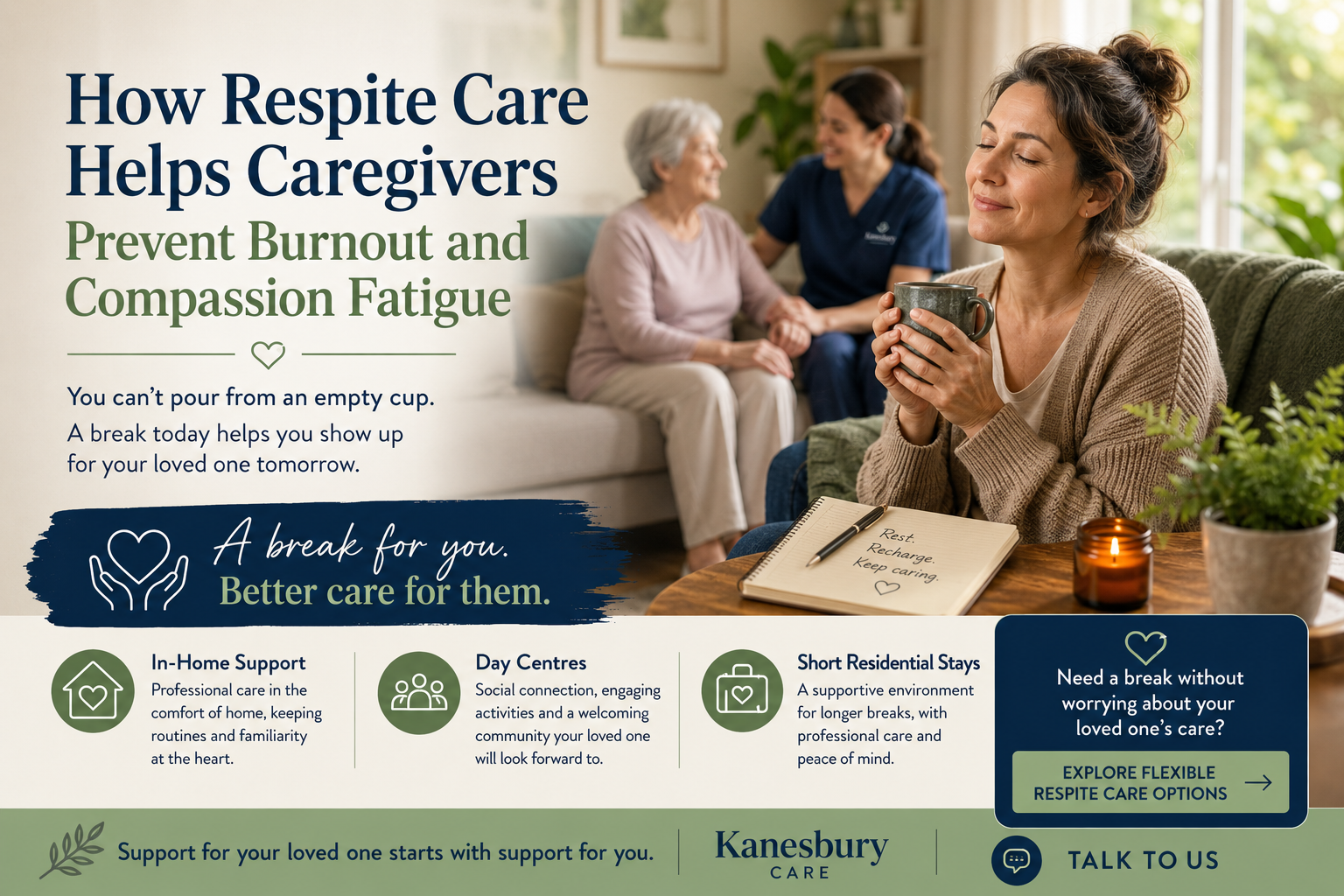
Nobody warns you about this part. You step into the caring role because you love someone, and it feels like the right thing to do. And it is. But weeks turn into months, and somewhere along the way, the exhaustion stops being something a good night’s sleep fixes. It gets into everything. Your patience. Your health. Your sense of who you are outside of this role. So many family carers reach a point where they are running on nothing and still pushing through because stopping feels impossible. Arranging respite care private breaks is not giving up on your loved one. It is the thing that keeps you able to show up for them at all.
The Two Walls Every Carer Eventually Hits
There is a difference between being tired and being burnt out. Most carers know the first one well. The second tends to creep in slowly after months or years of constant responsibility without enough time to recover.
Burnout often shows up in small ways at first. Your patience wears thin. Little things start feeling overwhelming. Even after a full night’s sleep, you still wake up exhausted. Over time, the physical and emotional strain can leave you feeling drained and stuck.
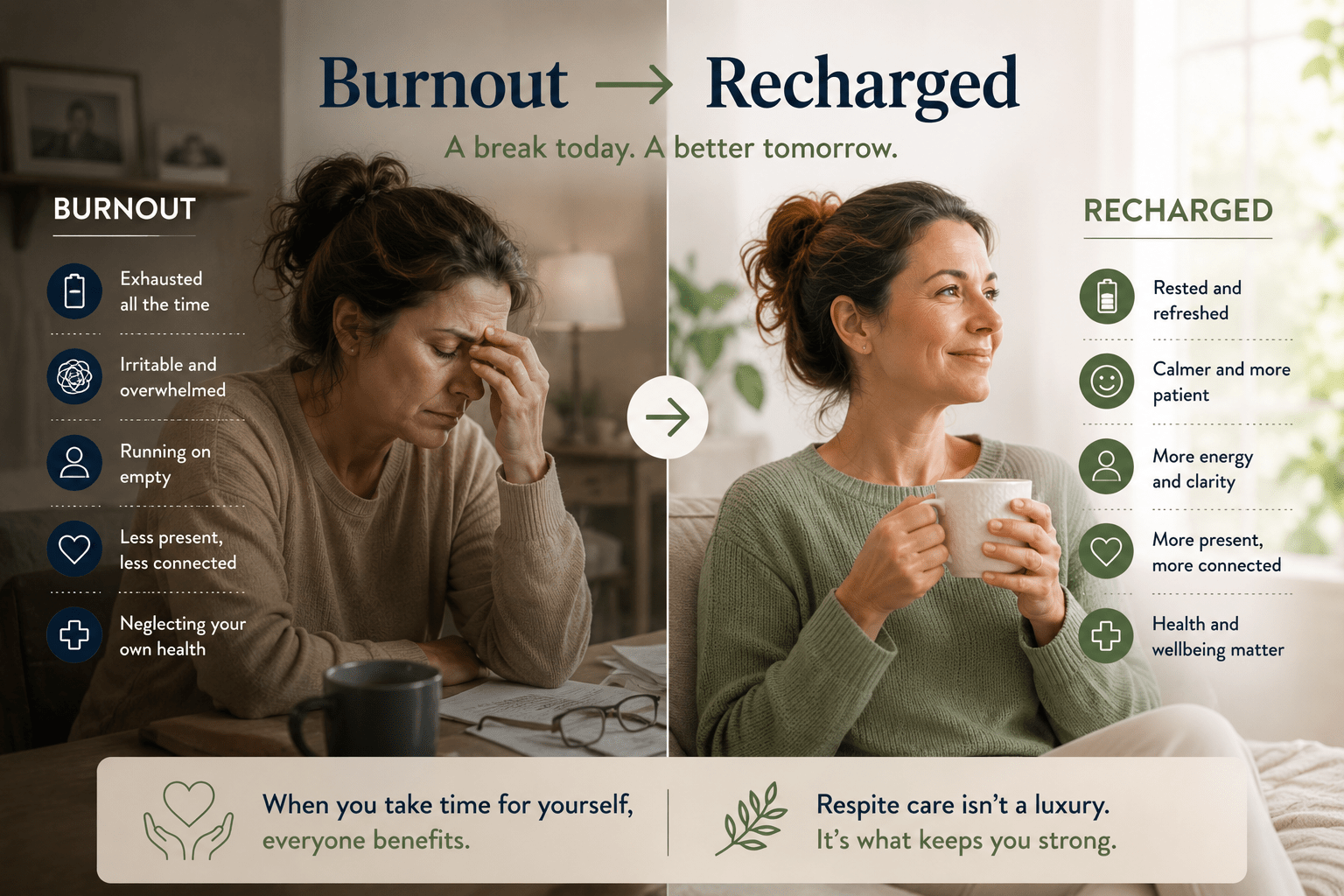
Compassion fatigue is different. It happens when you spend so much time supporting someone else’s struggles that your own emotional reserves begin to run low. You still care deeply, but you may feel less present or emotionally connected than before. Many carers feel guilty about this, but it is not a personal failing. It is a natural response to prolonged emotional stress without enough opportunity to recharge.
What a Break Actually Does
Short-term respite care works because it creates a much-needed pause in the cycle of constant caregiving. It gives your mind and body a chance to rest while a trained, trusted professional steps in to provide support.

That time can be used however you need it most. Catch up on sleep, attend appointments, relax, or simply enjoy a few hours without responsibility. While these moments may seem small, they can have a significant impact on your wellbeing.
When you return, you are often more patient, present, and better equipped to provide the quality care your loved one deserves.
The Options Are More Flexible Than Most People Realise
The hesitation many carers feel about professional respite care services is understandable. It can be difficult to trust someone else with routines and responsibilities you know by heart. However, quality respite care is built around detailed handovers and personalised support that reflects your loved one’s needs.

In-Home Support
For those who value familiarity and comfort, in-home respite care is often the best option. A trained carer provides support in the home, helping with daily tasks while allowing your loved one to remain in a familiar environment.
Day Centres
If your loved one enjoys social interaction, day centres can offer activities, companionship, and a welcoming community atmosphere. Many participants quickly look forward to attending and building new connections.
Short Residential Stays
For longer breaks, short residential stays provide professional care in a supportive setting. They allow carers to take time away while ensuring their loved one’s routine and wellbeing remain a priority.

Need a break without worrying about your loved one’s care?
[Explore Flexible Respite Care Options]
Conclusion
You cannot keep pouring from a cup that never gets refilled. It sounds obvious, but carers are often the last people to prioritise their own wellbeing because guilt gets in the way. Taking regular breaks through reliable respite care services does not make you any less devoted. It helps make long-term, sustainable care possible.
Without time to rest and recharge, burnout can eventually take its toll. If you’re unsure where to start, Kanesbury Care can help you explore your options, connect with the right support, and find a respite care solution that works for both you and your loved one.
Support for your loved one starts with support for you.
Frequently Asked Questions
What is respite care, and how does it support caregivers?
Respite care is when a trained professional temporarily takes over caring responsibilities, giving you time to rest and recharge. It is not a last resort. Instead, it is an important form of support that helps carers maintain their wellbeing over the long term. At Kanesbury Care, our respite care services are tailored to your loved one’s individual needs and routines, with careful handovers to ensure the transition feels as smooth and comfortable as possible for everyone involved.
How can respite care help prevent caregiver burnout?
Burnout is not some event that just happens; it is more like the slow buildup of pressure, with no real “stop” in between. Taking regular breaks sort of interrupts the whole momentum before it turns into a full crisis. Even being a few hours away from the caring role gives your body and mind a chance to unwind, as your system can finally catch up. Over time, those small pockets of recovery add up and make a noticeable difference in what you can keep up with, without finally cracking and falling apart.
What is compassion fatigue, and can respite care reduce it?
Compassion fatigue is kind of what occurs when the emotional output keeps going beyond emotional input for a long time. It’s not like the feeling just disappears all at once; no, it tends to fade slowly, and then kind of returns in a rebuilt way when you manage to have consistent time away from the pressure of the caring role. Most carers notice they start coming back feeling more emotionally available and more genuinely connected after even a relatively short pause from the usual routine, like there’s finally room again for the heart to settle.
How often should caregivers use respite care services?
It depends entirely on the person and the caring situation. Some carers genuinely benefit from a few hours of support each week woven into their normal schedule. Others find a longer break every couple of months works better for how they are built. The important thing is not the frequency specifically, but the consistency. Breaks that happen regularly as part of the routine do far more good than breaks that only arrive after everything has already fallen apart.