
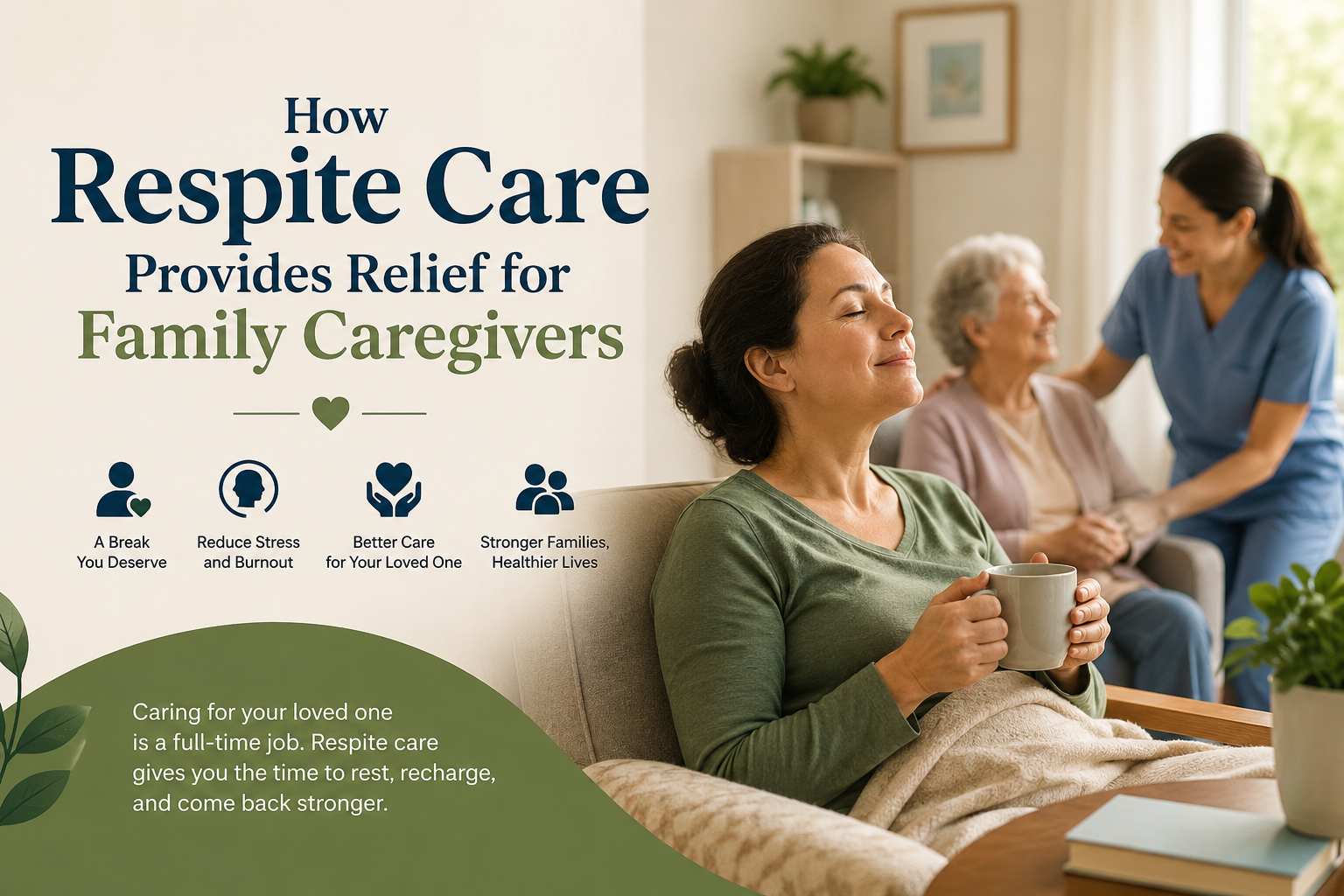
There is rarely a moment when someone decides to become a full-time carer. It happens in stages. A parent starts needing more help around the house. A partner’s condition slowly changes what each day requires. You start doing more, then a bit more, and somewhere along the way, it becomes the shape of your entire life.
The school runs, the work meetings, your own appointments, the things you used to do for yourself, all of it gets quietly squeezed out until caring is not something you do alongside your life but something that has replaced it.
Respite care does not fix all of that. But it gives it room to breathe, whether that is through support at home or a respite care home arrangement that offers a complete, temporary break.
What It Actually Means in Practice
When people hear the words respite care, they often picture something formal or clinical, such as a care home stay or hospital setting. In reality, the experience is often much simpler and more reassuring for families.
Home respite care means a trained carer comes to the house and provides support for a few hours, a few days, or longer. The person receiving care stays in familiar surroundings, while the family carer gets time away to rest, attend appointments, or focus on other responsibilities.
Respite live-in care offers more comprehensive support. A carer stays in the home and provides round-the-clock assistance, allowing the family caregiver to take a proper break, travel, recover from illness, or simply recharge without worrying about care needs.
Some situations cannot be planned for. If a family carer becomes ill, faces an emergency, or is suddenly unable to provide support, emergency respite care can step in quickly. Having access to this type of care helps ensure continuity and stability when unexpected challenges arise.
Need a short break from caregiving without guilt or stress?
The Part Nobody Talks About
Many family carers think about respite support long before they actually arrange it. Part of the delay is practical, such as figuring out what is available and how it works. But often, the bigger obstacle is guilt. Taking a step back from someone who depends on you can feel difficult, even when a qualified professional is providing care.
What many families discover after using respite care for the first time is that they wish they had done it sooner. The person receiving care is often more comfortable than expected, while the family carer returns genuinely rested. The result is usually less stress, fewer tensions, and a healthier caring relationship.
That is because long-term caregiving is only sustainable when carers also have support. Flexible respite services for caregivers are not an extra luxury. They are an important part of maintaining quality care for everyone involved.
What a Good Match Looks Like
One of the things that makes families hesitant about home respite care is the question of whether a stranger coming into the house is going to understand the person they care for well enough to do it properly. It is a fair concern. Someone who has been caring for their mother for three years knows things about her that are not written in any care plan.
That knowledge does not disappear when a respite carer arrives. A thorough handover, a well-prepared summary of preferences, routines and a carer who actually listens go a long way. For some people, the presence of someone new in the house takes a bit of adjusting, and it is worth being honest about that rather than expecting the first day to be seamless right away.
Kanesbury Care puts time into the matching process precisely because the fit between a carer and a client is not a minor detail. The person’s preferences, their communication style, what makes them comfortable and what unsettles them, these things shape which carer is right for a particular placement. Getting that right from the start makes the respite period genuinely useful rather than something everyone just gets through.
Respite Care for Families, Not Just for the Person Being Cared For
Something that gets overlooked in conversations about respite care is the effect on the wider family, not just the primary carer. Adult children who share the caring load across distance and guilt. Siblings who disagree about how much support their parent needs. Partners who have watched the person they married slowly disappear into a role that consumes them.
Respite care for families creates space for those relationships to exist in a different register for a while. A couple can spend time together that is not organised around care needs. An adult child visiting from out of town is not stepping into a home where their sibling is visibly running on empty. A family that has been managing on the edge of its capacity gets a period of relief that changes the atmosphere in the house.
These are not small things. They accumulate over time in the same way that unrelenting stress does, just in the opposite direction.
Final Words
Needing a break does not make someone a less devoted carer. In most cases, it makes them a more honest person. Recognising that you cannot do this indefinitely without support is not a weakness. It is just accurate. A respite care home arrangement with Kanesbury Care is a practical step, not a dramatic one, and most families find it far less complicated once they have taken it than it seemed from the outside looking in.
If you are at the point of wondering whether respite care might help, that wondering is usually a signal worth listening to.
Talk to a caring expert and find the right support for your family today.
Get a Respite Care Consultation
Frequently Asked Questions
What is respite care for family caregivers?
Respite care is temporary professional support that allows family caregivers to take a meaningful break from their caring responsibilities. It can take different forms depending on individual needs, including home respite care, respite live-in care, and emergency respite care for unexpected situations.
With support from Kanesbury Care, the person receiving care continues to receive consistent, high-quality assistance, while the family carer gets time to rest, recharge, and focus on their own wellbeing.
How does respite care benefit family caregivers?
The most immediate benefit is rest, but the effects kind of go past that, too. Carers who use flexible respite support for caregivers often find, over time, that they manage the physical and emotional demands of the role better. They’re less likely to end up burned out, more able to keep their own health on track, and quite frequently notice that their patience, their “capacity to care”, really, comes back stronger after a well-earned break. Also, the link between the carer and the person being cared for seems to ease out as well, because the constant proximity pressure is relieved for a while.
How long can respite care services be used?
There isn’t any standard duration. A respite arrangement can be a few hours in a single day, but it might also stretch into a long weekend, a whole week, or even run for several weeks, depending on what the family really needs. Families that use respite, often in care situations, may arrange cover for a fortnight or longer when the main carer needs a more extended time away. Kanesbury Care tends to work around the exact scenario, not squeeze people into some fixed package, because what counts as a “proper break” can be quite different from one person to the next.
When should a family consider using respite care?
The simple answer is that respite should kick in before the carer hits the point of total exhaustion, even if lots of families only get in touch once they have already passed that stage. Respite care for families tends to work best when it is set up as a planned, recurring part of how caregiving is arranged , not as some sort of last-minute emergency patch. If the person caring is sleeping badly, sidelining their own health, pulling away from people they used to see, or feeling as if they have no sense of self outside the caring role, then that usually means respite support is due , not early.
Can respite care be arranged at short notice?
Yes. Kanesbury Care understands families do not always have the luxury of planning weeks ahead, not really. Emergency respite care can be sorted out when a family carer suddenly gets taken ill , or when they have some unexpected commitment come up , or when they reach that stage where they just can’t carry on, without immediate support. If you reach out sooner rather than later in those moments, it tends to help ensure the right carer is matched quickly and that the person being cared for has the least amount of disruption possible during what is already a pretty stressful stretch.